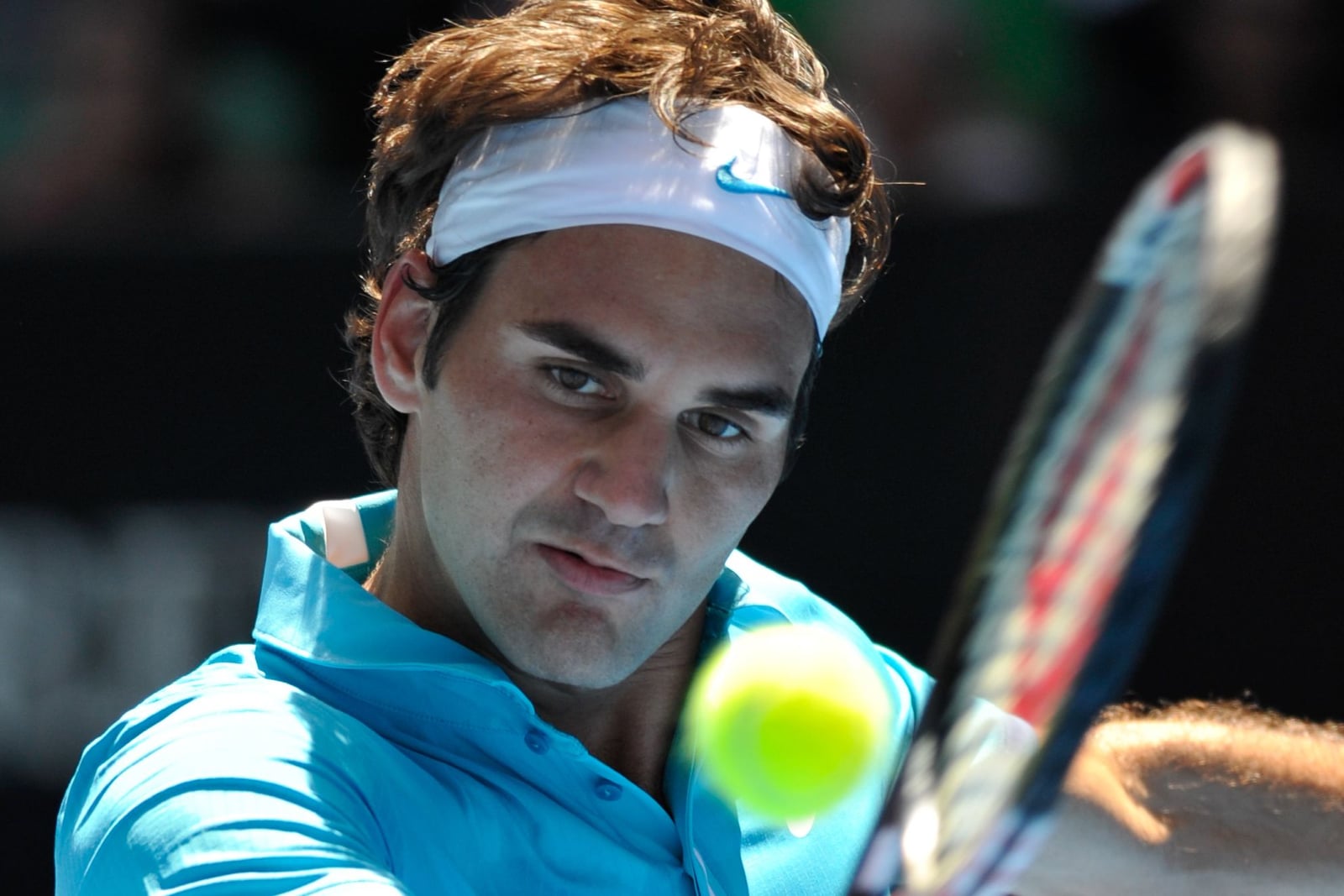
For a few months in 2026, Roger Federer belonged to one of the smallest clubs in sports: athletes who are also billionaires. Then, on a single Tuesday in August, a shoe company’s earnings report took that title away.
It is a strange kind of wealth story—not a scandal, not a bad investment, not even really bad news for the underlying business. Just a reminder of what it means when an athlete’s fortune stops being made of endorsement checks and starts being made of stock.
The $1.1 Billion Debut
Federer made his first appearance on Forbes’ official World’s Billionaires List in March 2026, with an estimated net worth of roughly $1.1 billion. He had crossed the billion-dollar threshold on Forbes’ real-time tracker roughly seven months earlier, in August 2025, joining a short list of athletes—among them Michael Jordan, LeBron James, Tiger Woods, and Cristiano Ronaldo—who have ever reached ten figures.
What made Federer’s path unusual is that almost none of it came from a paycheck. His on-court career earned him an estimated $130.6 million in prize money—a serious number, but a fraction of what Canelo Álvarez made in a single year recently. Federer’s billion came from somewhere else entirely: a shoe company he helped build.
The On Holding Bet
In 2019, three years before he retired, Federer partnered with On, a small Swiss running-shoe brand, taking an equity stake reported at roughly 2.5–3% and lending his name and design input to signature footwear. It was an unusual move for an athlete at his level—most stars license their name to an established giant rather than take equity in a challenger brand.
On went public on the New York Stock Exchange in 2021 and grew into one of the fastest-expanding performance footwear companies in the world, with a market capitalization that has been estimated well into the tens of billions of dollars. Federer’s early stake, worth relatively little at the time he signed, compounded into an estimated $400–500 million position by the time he crossed the billionaire threshold—the single largest asset in his portfolio, and the one that did the heaviest lifting in getting him there.
The Rest of the Portfolio
On is the headline, but it is not the whole story. Federer’s other major income streams:
- Uniqlo. After leaving Nike in 2018, Federer signed a 10-year clothing deal with the Japanese retailer reportedly worth $300 million, running through 2028—a contract that continues to pay out four years into his retirement.
- Rolex, Mercedes-Benz, and Lindt. Long-running endorsement relationships that, at his commercial peak, were estimated to bring in significant annual income independent of tennis results.
- Team8. In 2013, Federer co-founded the sports management company Team8 with his longtime agent Tony Godsick, giving him more direct control over his commercial deals than the traditional agency model allows. Team8’s remit has since expanded into event ownership, including the Laver Cup, the team tennis event Federer helped create.
The pattern echoes what other athletes on the richest-athletes list have done: convert athletic-era leverage into equity and infrastructure that outlasts a playing career. Federer’s version is a shoe company instead of Jordan’s Nike royalty or LeBron’s Fenway stake—but the underlying move is identical.
The August Wobble
On August 11, 2026, On Holding reported second-quarter net sales of 850.4 million Swiss francs (about $1.04 billion)—up 13% year over year, a genuinely strong growth number. It just wasn’t strong enough: analysts had expected roughly 878.4 million francs, and the market punished the miss hard. On’s share price fell approximately 19% in a single trading session.
Because Federer’s fortune is now concentrated in a single publicly traded stock, the drop showed up in his net worth almost immediately. Forbes’ real-time billionaires tracker put his estimated net worth at $952.4 million as of that afternoon—a loss of at least $52 million in a matter of hours, and enough to knock him back below the billion-dollar line he had only recently crossed.
Nothing about Federer’s own finances changed that day. He didn’t sell a stake, take on debt, or make a bad bet. A shoe company he owns a small piece of grew 13% instead of the growth rate Wall Street had priced in, and that was enough to erase, on paper, more money than most people earn in a lifetime.
Why This Kind of Billion Is Different
Compare Federer’s fortune to Michael Jordan’s $4.3 billion, built on a Nike royalty stream that pays out at roughly the same rate whether Nike’s stock is up or down that week, or Magic Johnson’s insurance-company fortune, which doesn’t reprice every time a headline breaks. Federer’s wealth is real, but it is also marked to market in a way theirs largely is not—which is exactly why a single earnings miss at a company he doesn’t run can move his net worth by nine figures in an afternoon.
That volatility cuts both ways. On’s long-term growth story is what created Federer’s fortune in the first place; a single bad quarter taking him back under $1 billion doesn’t undo the underlying bet, and On’s shares have room to recover the way they climbed in the first place. But it is a useful data point for anyone tempted to treat “billionaire athlete” as a permanent label rather than a snapshot—one more reminder, alongside why so many pro athletes go broke in the other direction, that paper wealth and cash flow are not the same thing.
The Bottom Line
Roger Federer’s fortune—built on a shoe company bet almost nobody else in tennis was willing to make, a decade-long Uniqlo deal that outlived his career, and $130.6 million in prize money that turned out to be the smallest part of the equation—remains one of the more interesting wealth stories in sports. Whether Forbes counts him as a billionaire on any given Tuesday now depends less on anything Federer does and more on how On Holding’s stock trades. As of August 2026, that number reads $952.4 million. It has been over $1 billion before, and given how it got there, there is no reason to think it won’t be again.
More from Absolute Baller:
- Richest Athletes in the World by Net Worth: 2026 Rankings
- The World’s 10 Highest-Paid Athletes in 2026: Forbes Rankings Revealed
- Michael Jordan Net Worth 2026: How the $90M Career Salary Became a $4.3 Billion Fortune
- Cristiano Ronaldo Net Worth 2026: Inside His $1.4 Billion Empire
- LeBron James Net Worth 2026: Inside the $1.4 Billion Business Empire
- Lionel Messi Net Worth 2026: Inside the $1.1 Billion Empire He Built Alongside Football
- Why Pro Athletes Go Broke: The Financial Traps Draining Million-Dollar Careers
Frequently Asked
Is Roger Federer still a billionaire?
Not at the moment, by Forbes' real-time count. Federer debuted on Forbes' official World's Billionaires List in March 2026 at an estimated $1.1 billion, but on August 11, 2026, a roughly 19% single-day drop in On Holding's share price knocked his real-time estimated net worth down to $952.4 million. Because so much of his fortune sits in publicly traded stock, his billionaire status can move with the market rather than staying fixed.
How did Roger Federer become a billionaire?
Federer's billionaire status rests mainly on one investment: a roughly 2.5–3% equity stake in On Holding, the Swiss running-shoe company he partnered with in 2019 and helped design a signature shoe for. On went public in 2021, and its rise turned Federer's early equity position into hundreds of millions of dollars. Layered on top are his 10-year, $300 million Uniqlo clothing deal (2018–2028), long-standing endorsements with Rolex, Mercedes-Benz, and Lindt, and $130.6 million in career prize money.
How much is Roger Federer's stake in On Holding worth?
Estimates have varied with On's stock price. Reports around his March 2026 Forbes billionaire debut valued his roughly 3% stake at $400–500 million against On's market capitalization at the time. After the stock's roughly 19% single-day fall on August 11, 2026, Forbes said Federer lost at least $52 million in that session alone, illustrating how directly his fortune now tracks a single publicly traded stock.
How much money did Roger Federer make in his tennis career?
Federer earned an estimated $130.6 million in career prize money, one of the highest totals in tennis history, though well below what he made off the court. His on-court earnings are a small fraction of his overall wealth, which Forbes has estimated at over $1 billion once endorsements, appearances, and his On Holding equity are included.
Why did Roger Federer's net worth drop in August 2026?
On Holding, the Swiss sportswear company in which Federer holds an equity stake, reported second-quarter net sales of 850.4 million francs (about $1.04 billion)—up 13% year over year but short of the roughly 878.4 million francs analysts expected. Investors responded by selling off the stock, which fell about 19% in a single session on August 11, 2026, cutting Federer's stake value and his real-time estimated net worth by tens of millions of dollars in a matter of hours.