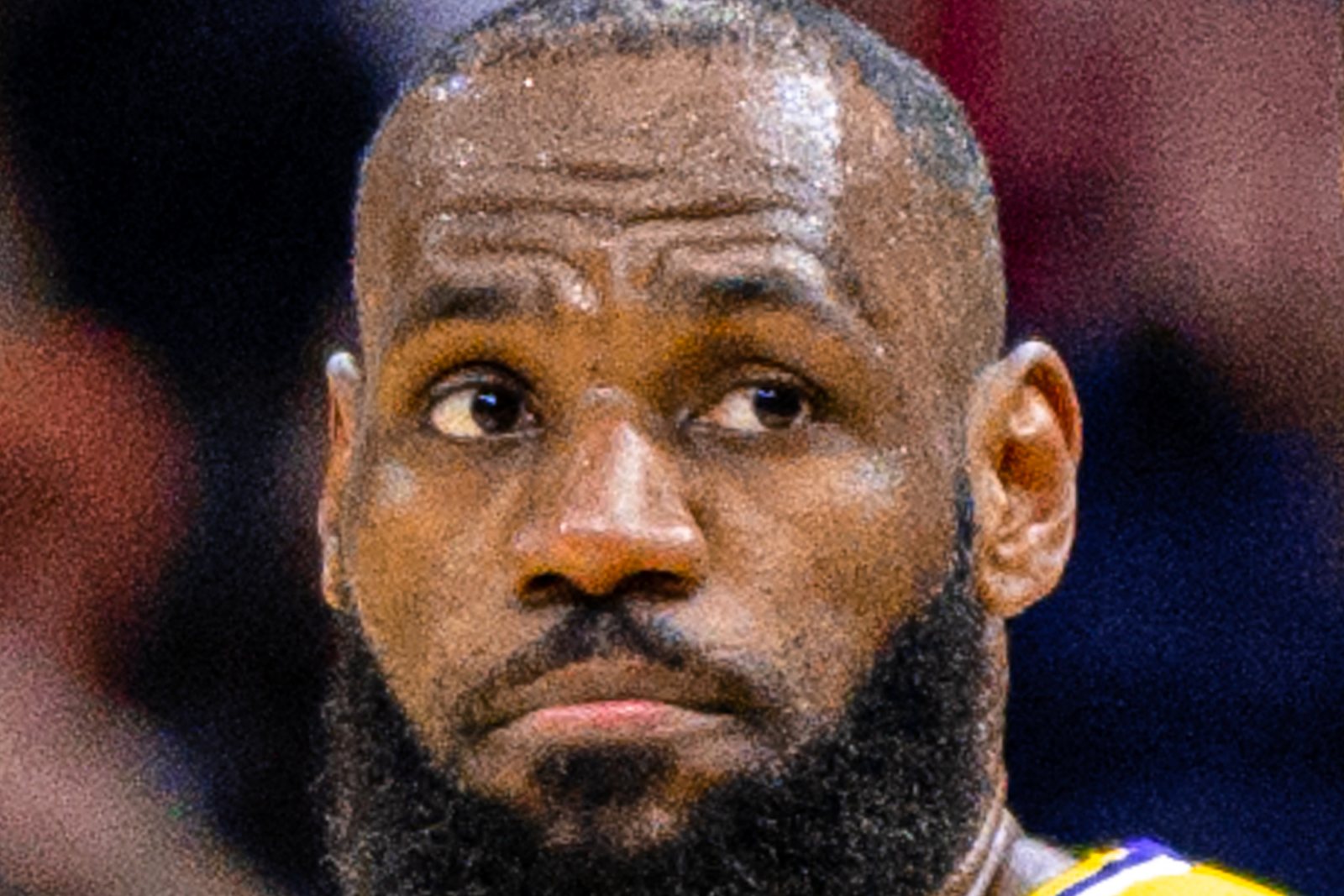
$1.4 billion. That is LeBron James’s estimated net worth in 2026, according to Forbes—making him the first active NBA player ever to reach billionaire status, built almost entirely on business equity rather than his playing salary.
LeBron James’s estimated net worth in 2026 is approximately $1.4 billion. His career NBA salary total across more than two decades in the league is roughly $400 million before taxes.
The gap between those two numbers is where the real story lives.
James is the first active NBA player to achieve billionaire status. Forbes confirmed the milestone in 2026. He got there not by earning more on the court than anyone else—Cristiano Ronaldo makes more than twice what James does—but by consistently converting athletic fame into permanent equity at an age when most professional athletes were still signing whatever endorsement deal their agent brought through the door.
Here is exactly how the $1.4 billion breaks down.
LeBron James’s Nike Lifetime Deal: The Foundation Everything Else Rests On
In December 2015, LeBron James signed a lifetime endorsement deal with Nike—the largest in the company’s history at the time. The deal is reported to be worth over $1 billion across its term, paying an estimated $32 million per year with equity participation that grows with Nike’s business.
The critical difference between this deal and a standard endorsement contract is the equity participation. James does not simply cash a check; he holds a stake in Nike’s long-term commercial performance. That distinction—between being paid for access to your name and actually owning a piece of what that name generates—runs through every major financial decision James has made.
He began his career, like most NBA stars, as a traditional endorser: Nike, Sprite, Coca-Cola, State Farm. By his late 20s, he had started thinking about those relationships differently. The lifetime Nike deal was the first public result of that shift.
SpringHill Company: The Business Empire Built to Outlast Basketball
SpringHill Company is the media and entertainment business James co-founded with longtime business partner Maverick Carter. It is named after the apartment complex in Akron, Ohio where James grew up.
The company produces content for Netflix, Disney, and other major platforms, operating across film, television, and branded entertainment. Its reported valuation stands at $725 million, with investors including Nike, RedBird Capital (the sports-focused fund run by Gerry Cardinale), Epic Games, and Fenway Sports Group.
James and Carter retain majority ownership.
SpringHill is structurally important to understand because it is not a celebrity passion project. It is a functioning media company built on the premise that athletes with significant cultural audiences can produce content that competes with traditional studios—without ceding ownership to those studios. James and Carter identified that leverage early and built infrastructure around it rather than licensing it for a fee.
The company’s valuation at $725 million represents one of the most significant athlete-owned media businesses ever assembled. It generates revenue that is entirely independent of anything LeBron James does on a basketball court.
Fenway Sports Group: The $6.5 Million Bet That Turned Into $90 Million
In 2011, LeBron James paid approximately $6.5 million for a small equity stake in Fenway Sports Group. At the time, the investment attracted notice—not because it was large, but because it gave him a minority position in one of the most valuable sports ownership groups in the world.
FSG controls the Boston Red Sox, Liverpool FC, and NASCAR’s RFK Racing, among other assets. It operates at the intersection of American and European sports markets in a way that almost no other ownership group does.
By 2026, James’s FSG stake is estimated to be worth roughly $90 million—approximately a 14x return on his initial outlay, without accounting for any distributions along the way. Liverpool’s valuation alone has climbed into the multi-billion dollar range since 2011.
The FSG investment is instructive for what it required of James. He did not buy a franchise. He did not run a team. He wrote a check at 26 years old, held the position, and let compounding do its work. That discipline—buying quality, not trading it—defines how he has deployed capital.
Blaze Pizza: The Early Restaurant Bet
In 2012, James and Carter invested under $1 million in Blaze Pizza, a then-small fast-casual restaurant concept. Their stake gave them ownership in the chain and, later, the Blaze Pizza franchise rights for Los Angeles—a market they operated directly rather than collecting a passive royalty.
Blaze expanded rapidly over the following decade, reaching hundreds of locations. James’s stake generated returns that significantly exceeded the original investment and, more importantly, demonstrated his investment model at the earliest stage of his business career: get in early, own equity, hold.
LeBron James’s Endorsements and the Broader Investment Picture
Beyond the flagship holdings, James’s portfolio includes endorsements with Beats by Dre, PepsiCo, Taco Bell, and Richard Mille, each of which produces income without requiring the equity participation that defines his most significant wealth-building decisions.
His active Lakers contract—still earning at an elite level while he remains in the league—funds his operating expenses and provides the cash flow that allows him to hold longer-term positions without pressure to liquidate.
The combination is unusual: most athletes’ investment portfolios are built from career savings, which requires them to sell winners to fund operating costs. James structured things so the basketball contract handles the bills while the equity compounds.
What LeBron James’s $1.4 Billion Business Empire Actually Means
LeBron James’s net worth is roughly ten times his estimated total NBA earnings across his career. That ratio is the single most important number for understanding what he has actually built.
Michael Jordan provides a useful comparison: Jordan’s net worth of approximately $4.3 billion (see the full richest-athletes rankings) rests largely on Nike Air Jordan royalties that generate an estimated $275 million per year, indefinitely. His playing career was the door opener. The brand was the asset. Jordan, largely by accident of timing and Nike’s own desperation in 1984, ended up with the equity version of that relationship.
James studied that model and replicated the logic deliberately, across multiple assets, before the career was over.
He has said publicly that he intends to own an NBA franchise. When that happens—and at his current capital base, the financing is not the barrier—it will represent the next phase of the same strategy he has been executing since his mid-20s: accumulating ownership positions while the name is still generating maximum leverage.
The basketball will end. The assets will not.
The 2026 Ownership Reversal: Why the Las Vegas Plan Stalled
That franchise ambition ran into a real obstacle in 2026. James had long been positioned as a likely owner of an NBA expansion team in Las Vegas, in part because Fenway Sports Group—his equity partner since 2011—looked like his natural financing vehicle for a deal that league governors were expected to price in the $7–10 billion range when they voted in March 2026 on whether to formally explore expansion into Las Vegas and Seattle.
FSG reportedly stepped back from the NBA expansion bidding process in 2026 as that price tag climbed, removing James’s most obvious path to financing a franchise. By mid-2026, James said publicly he was not interested in Las Vegas ownership “at all”—a reversal from years of stated intent.
The retreat does not close the door permanently. NBA expansion timelines run in years, not months, and James’s FSG equity keeps him inside sports ownership regardless of whether a Las Vegas franchise happens on his terms. But it is a concrete 2026 data point against the assumption—repeated throughout years of coverage of his finances—that a team purchase was the inevitable next step in the business empire he has built.
LeBron James Earnings 2026: $137.8 Million, and Only $52.8 Million of It Was Basketball
Forbes’ 2026 highest-paid athletes list, published in May 2026, put James fourth in the world at $137.8 million — behind Cristiano Ronaldo ($300 million), Canelo Álvarez ($170 million) and Lionel Messi ($140 million), and still the highest-paid player in the NBA at 41.
The split inside that number is the part worth reading twice. Forbes credited James with roughly $52.8 million on the court and $85 million off it — about 62% of a year’s income arriving from endorsements and investments rather than from playing. Forbes named DraftKings, Hennessy and Richard Mille among the partners behind the off-court figure.
Only three of the ten highest-paid athletes in 2026 earned more away from their sport than in it. James is one of them. Shohei Ohtani is the extreme version of the same pattern — $125 million of his $127.6 million came from outside his Dodgers salary — and Stephen Curry is the third. Everyone else on the list is still being paid mostly to compete. (Full list: The World’s 10 Highest-Paid Athletes in 2026.)
That ratio is not a quirk of one accounting year. It is the design.
The 76ers Contract: LeBron’s Playing Salary Just Fell by More Than 90%
On 24 July 2026, James agreed to a two-year, roughly $8 million contract with the Philadelphia 76ers, with a player option on the second year — the smallest salary of his career, and a move East after eight seasons with the Lakers. He had exercised a $52.63 million player option with the Lakers for 2025-26; the new deal pays him something closer to $4 million a year.
“This is my last decision,” James said. “I’m not going for money.”
Read as a financial event, the sentence is almost literally true. The Forbes 2026 figures say a 90%-plus cut to his playing salary removes roughly $49 million from a $137.8 million year — painful for almost any other athlete on that list, and close to a rounding error against the $85 million his off-court holdings produced in the same period and the $1.4 billion balance sheet underneath it.
This is what two decades of converting fame into equity actually buys: the ability to price a basketball contract on where you want to finish rather than on what you need to be paid. The Nike royalty stream, the Fenway stake and the media company do not care which jersey he wears, or whether he wears one at all.
Fulwell Entertainment: What Happened to the SpringHill Company
The $725 million valuation attached to SpringHill throughout this article is a real number with a specific date on it: it comes from the 2021 funding round led by RedBird Capital. The company has since changed shape.
In November 2024, SpringHill agreed to merge with Fulwell 73 — the British production company behind The Late Late Show with James Corden and a large slate of unscripted and music content. Both sides described it as a combination of equals rather than an acquisition, with no money changing hands between them and existing shareholders committing roughly $40 million of fresh capital into the combined business. The deal closed in 2025, and the merged group now operates under the Fulwell Entertainment umbrella, with SpringHill’s Maverick Carter and Fulwell’s Leo Pearlman as joint chief executives.
The investor list that came across is the tell: RedBird Capital Partners, Nike, Fenway Sports Group, UC Investments, Epic Games and Main Street Advisors from the SpringHill side, plus Eldridge Industries from Fulwell’s. Nike and Fenway Sports Group are, separately, James’s largest endorsement partner and the ownership group he bought into in 2011. His media company, his shoe deal and his sports-equity position are not three investments. They are one interlocking set of relationships.
No valuation has been disclosed for the combined company, so $725 million remains the last public mark on the SpringHill side rather than a current figure for what James’s media holding is worth today — a distinction most net-worth coverage of him ignores.
More from Absolute Baller:
- The World’s 10 Highest-Paid Athletes in 2026: Forbes Rankings Revealed
- Michael Jordan Net Worth 2026: How the $90M Career Salary Became a $4.3 Billion Fortune
- Canelo Álvarez Net Worth 2026: How Boxing’s Highest Earner Built a $300M Fortune on His Own Terms
- Floyd Mayweather Net Worth 2026: Why Nobody Agrees
- Serena Williams Net Worth 2026: Richest Female Athlete
- Tiger Woods Net Worth 2026: Inside the $1.5 Billion Fortune He Built After Nike
- The World’s Richest Athletes by Net Worth: 2026 Rankings
- Athletes Who Own Sports Teams: The 2026 List
- Why Pro Athletes Go Broke: The Financial Traps Draining Million-Dollar Careers
Frequently Asked
What is LeBron James's net worth in 2026?
LeBron James's net worth is estimated at approximately $1.4 billion in 2026, according to Forbes, making him the first active NBA player to achieve billionaire status.
How did LeBron James become a billionaire?
LeBron James became a billionaire primarily through his lifetime Nike deal (reported at over $1 billion in total value), his SpringHill Company media business (valued at $725 million), his Fenway Sports Group equity stake, and early investments in companies like Blaze Pizza. His basketball salary was a relatively small contributor to his total net worth.
What businesses does LeBron James own?
LeBron James's key business holdings include SpringHill Company (a media and entertainment firm co-founded with Maverick Carter), an equity stake in Fenway Sports Group (which owns Liverpool FC, the Boston Red Sox, and NASCAR's RFK Racing), a lifetime Nike partnership, and early-stage investments in Blaze Pizza, among other ventures.
What is SpringHill Company?
SpringHill Company is the media and entertainment business LeBron James co-founded with business partner Maverick Carter, named after James's childhood apartment complex in Akron, Ohio. It has a reported valuation of $725 million, with investors including Nike, RedBird Capital, and Epic Games. The company produces content for Netflix, Disney, and other platforms.
Does LeBron James own a stake in Liverpool FC?
Yes. LeBron James holds an equity stake in Fenway Sports Group (FSG), which owns Liverpool FC, the Boston Red Sox, and NASCAR's RFK Racing, among other sports properties. He purchased his FSG stake in 2011 for approximately $6.5 million; that position is now estimated to be worth roughly $90 million.