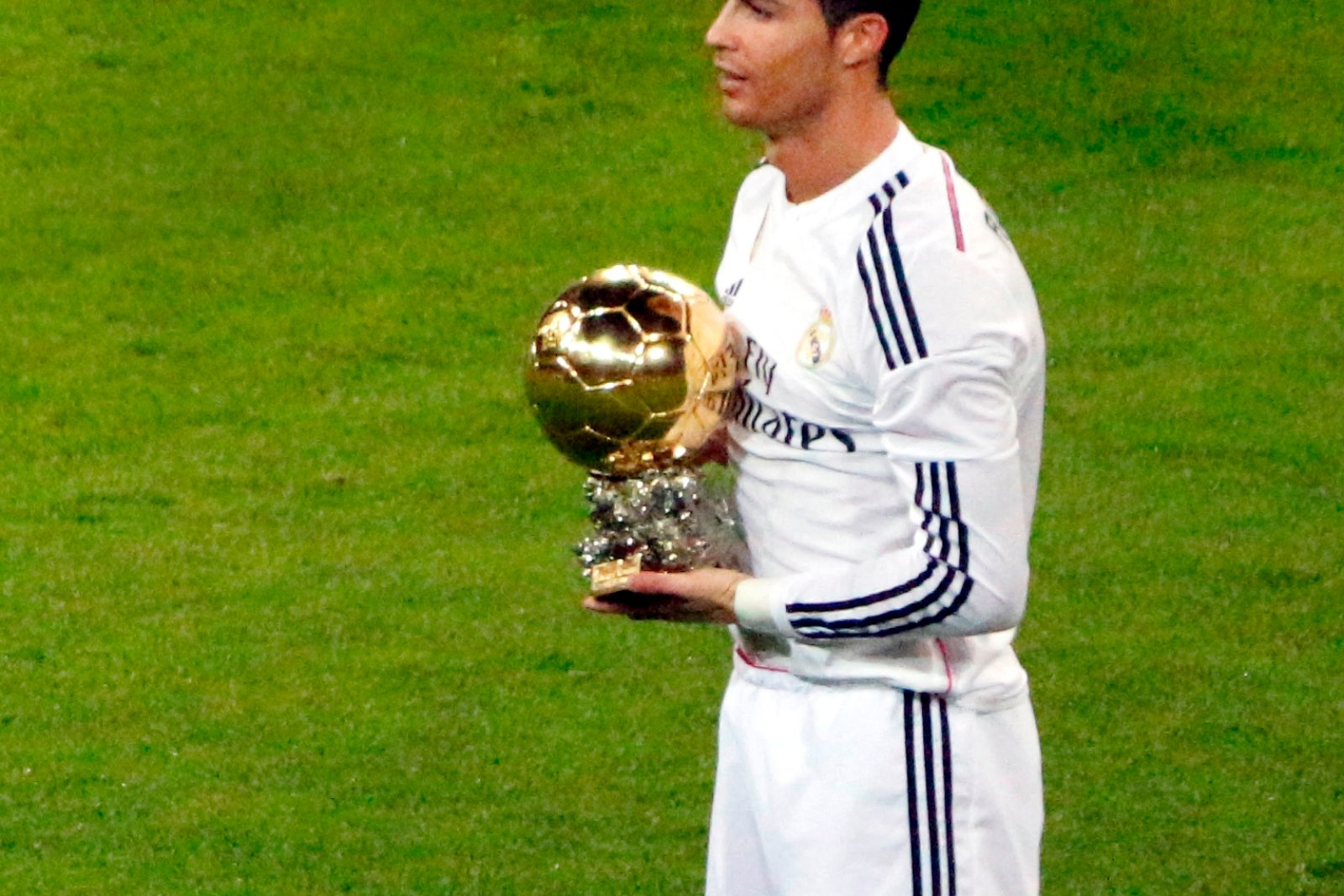
$1.4 billion. That is Cristiano Ronaldo’s estimated net worth in 2026, according to Forbes and Bloomberg—making him football’s first active billionaire and one of only seven athletes in history to cross the threshold.
Cristiano Ronaldo’s estimated net worth is approximately $1.4 billion as of 2026. His total annual earnings are estimated at $300 million—which Forbes has ranked as the highest of any athlete in the world for four consecutive years.
Both numbers are remarkable. Neither tells the full story.
Ronaldo is the best-paid active footballer on the planet and has been for the better part of a decade. But the Al Nassr salary that generates so many headlines is almost the least interesting part of how this billion-dollar fortune was built. The more important question is what he built around it—and when.
Here is exactly how the $1.4 billion breaks down.
Al Nassr: The Largest Active Playing Contract in Football History
In January 2023, Ronaldo signed with Saudi Pro League club Al Nassr, with his contract reported at approximately €208 million per year—roughly $235 million at current exchange rates. In June 2025, he signed a contract extension that runs through June 2027.
The headline salary is extraordinary. What makes it more extraordinary is the jurisdiction.
Saudi Arabia levies no personal income tax. That means Ronaldo’s take-home figure is essentially identical to his gross salary. A player earning $235 million in England would retain roughly half after tax; in Spain or France, somewhat more but still significantly less. In Riyadh, Ronaldo keeps all of it.
By the time his Al Nassr contract concludes in June 2027, Ronaldo will have collected an estimated $700 million in playing salary from the Saudi deal alone—more than many of history’s greatest athletes earned across their entire careers.
His total career earnings from playing salary and endorsements are already estimated to have crossed $1 billion—a first for any footballer in history.
The Nike Lifetime Deal: A Foundation Built in Lisbon
Ronaldo’s relationship with Nike dates to his arrival at Sporting CP in Lisbon in the early 2000s. His first professional boot deal was with Nike. His first major global endorsement was Nike. The commercial relationship has never broken.
In 2016, Nike extended that relationship into a lifetime partnership—making Ronaldo one of only two active athletes to hold a Nike lifetime deal alongside LeBron James. The deal is reported to be worth over $1 billion across its term, with Ronaldo earning an estimated base of $18 million per year plus royalties on CR7-branded merchandise sold through Nike’s distribution network.
The royalty structure is what separates this from a standard endorsement. Ronaldo does not simply cash a check for appearing in campaigns. Every CR7 Nike boot or kit sold globally generates royalty income that compounds with Nike’s commercial scale. It is a fundamentally different financial relationship than being a paid spokesperson—closer to a revenue share than a flat fee.
The Nike deal is the clearest example of a pattern that runs through Ronaldo’s entire business career: convert fame into ownership or revenue participation, not just fees.
Instagram: 665 Million Followers and What They’re Actually Worth
Cristiano Ronaldo is the most followed person on Instagram. As of 2026, his account has over 665 million followers—more than any other individual in the platform’s history.
That audience is a commercial asset that generates income entirely independently of any game he plays.
Ronaldo publishes an estimated 50 or so sponsored posts per year. Industry estimates put his rate at over $3 million per sponsored post at current follower scale and engagement rates, placing his annual Instagram income in the range of $100–150 million—a figure that rivals his Nike deal in total value.
This matters for two reasons. First, it generates real cash that supplements both his playing salary and his equity positions. Second, and more importantly, it is an asset that depreciates slowly. Ronaldo’s football-playing career will end; his audience size will decline gradually, not immediately. The commercial power of a 500- or 600-million-follower account—even in retirement—remains enormous, and the deals available to it dwarf anything achievable by most traditional media companies.
His social media platform is not a marketing channel for his brand. It is a revenue-generating business in its own right.
Pestana CR7: A Hotel Empire Across Six Cities
Ronaldo’s most tangible physical business is the Pestana CR7 hotel chain, a joint venture with Portugal’s Pestana Hotel Group—one of the country’s largest hospitality operators.
The partnership gives Ronaldo an estimated 50 percent equity stake in the venture, with properties in Lisbon, Madeira, Madrid, New York, Marrakech, and a 151-room flagship hotel in Riyadh announced for early 2026. The Riyadh opening reflects a deliberate geographic alignment: Ronaldo’s Saudi presence has driven significant tourism and commercial interest in the country, and the hotel positions the CR7 brand at the center of that momentum.
The chain’s properties are branded mid-to-premium lifestyle hotels rather than budget properties. They carry a style aesthetic tied to Ronaldo’s personal brand—an important distinction because the hotels market to the same demographic that follows his Instagram, buys his jerseys, and aspires to the lifestyle he represents.
Annual revenue across the chain is estimated at €50–80 million, with Ronaldo’s equity position representing one of his most durable long-term assets. Hotel real estate appreciates on its own timeline, generates operating income independent of sports performance, and is fully owned—not licensed, not sponsored.
Insparya: The Healthcare Business Nobody Talks About
Less widely discussed than his hotels but arguably more strategically interesting is Insparya, the hair restoration clinic chain Ronaldo co-founded.
Insparya operates 13 clinics across Portugal, Spain, Italy, and the Middle East, with a Riyadh branch opened to align with his Saudi footprint. The company employs over 400 medical and support professionals and carries an estimated market value of $107 million.
The business sits at the intersection of two macro trends: the growth of aesthetic medicine globally and the normalization of hair restoration treatments among professional and high-income men. As a co-founder who can market the clinics to his own audience at zero marginal cost, Ronaldo occupies a structurally advantaged position that no pure financial investor could replicate.
Insparya is currently a private company. If it reaches scale and pursues any kind of exit—a sale, a merger with a larger aesthetic medicine group, or a public offering—Ronaldo’s stake could generate a return that rivals the hotel venture.
CR7 Consumer Brand: Clothing, Fragrance, Underwear, Gyms
Beyond the flagship businesses, Ronaldo operates a consumer portfolio under the CR7 brand: clothing, underwear, fragrance, eyewear, and CR7 Crunch Fitness gyms—a co-branded fitness franchise expansion. The CR7 consumer brand is estimated to be worth between $250 million and $400 million in total, generating an estimated $30–50 million in annual operating profit.
These businesses are smaller individually than the hotels or Insparya, but they matter collectively: they keep the CR7 brand commercially active across multiple consumer categories, generate their own marketing flywheel, and create the platform from which larger deals—new licensing, new geographies, eventual brand monetization—can be structured.
What the $1.4 Billion Actually Means
The comparison that puts Ronaldo’s financial achievement in clearest relief is not with other footballers—it is with Michael Jordan.
Jordan’s estimated net worth of $4.3 billion (see the full richest-athletes rankings) rests primarily on Nike Air Jordan royalties, which generate approximately $275 million per year indefinitely, long after his playing days ended. His basketball career was the foundation. The Nike brand was the actual asset—one that Jordan did not fully control but benefited from enormously through a structure that was unusual for 1984.
Ronaldo looked at that model from a different era, with different leverage, and built something parallel—but with significantly more ownership. His Nike deal, his hotels, his clinics, his social media platform, and his consumer brand are all things he owns equity in, not just things he licenses his name to. That equity accumulates differently than a salary or a standard endorsement fee.
LeBron James took the same equity-first approach (see how LeBron built his $1.4 billion empire). The parallel is not coincidental. Both James and Ronaldo recognized, earlier than most, that athletic fame is a depleting asset—and that the only way to make it permanent is to convert it into ownership while it is at peak value.
Ronaldo started that conversion earlier than almost anyone in team sports. His Nike lifetime deal, his hotel venture, and his consumer brand were all established while he was still at his athletic peak. The $1.4 billion is the result of those decisions compounding for more than a decade.
The football will end. The brand already runs without it.
More from Absolute Baller:
- The World’s Richest Athletes by Net Worth: 2026 Rankings
- LeBron James Net Worth 2026: Inside the $1.4 Billion Business Empire He Built While Still Playing
- Michael Jordan Net Worth 2026: How the $90M Career Salary Became a $4.3 Billion Fortune
- Tiger Woods Net Worth 2026: Inside the $1.5 Billion Fortune He Built After Nike
- The World’s 10 Highest-Paid Athletes in 2026: Forbes Rankings Revealed
- Why Pro Athletes Go Broke: The Financial Traps Draining Million-Dollar Careers
- Athletes Who Own Sports Teams: The 2026 List
Frequently Asked
What is Cristiano Ronaldo's net worth in 2026?
Cristiano Ronaldo's net worth is estimated at approximately $1.4 billion in 2026, according to estimates from Forbes and Bloomberg, making him football's first active billionaire and one of only seven athletes ever to cross the $1 billion threshold.
How did Cristiano Ronaldo become a billionaire?
Ronaldo crossed the $1 billion net worth milestone in 2025, driven primarily by three factors: his record-breaking Al Nassr contract (reported at around $235 million per year with no Saudi income tax), his Nike lifetime partnership (reportedly worth over $1 billion in total value), and the compounding growth of his CR7 brand spanning hotels, clothing, fitness, and fragrance. His Instagram audience of 665 million followers—the largest of any individual in the world—generates significant additional commercial income.
How much does Cristiano Ronaldo earn from Al Nassr?
Ronaldo's Al Nassr salary is reported at approximately €208 million per year (roughly $235 million at current exchange rates). Saudi Arabia levies no personal income tax, meaning Ronaldo takes home the full gross amount. This makes it the largest active playing salary in football history, dwarfing the packages at the richest European clubs.
What businesses does Cristiano Ronaldo own?
Ronaldo's business holdings include a hotel joint venture with Pestana Hotel Group (Pestana CR7 hotels in Lisbon, Madeira, Madrid, New York, Marrakech, and a planned Riyadh flagship opening in 2026), Insparya (a hair restoration clinic chain with 13 locations and an estimated $107 million market value), CR7 Crunch Fitness gyms, and the CR7 consumer brand covering clothing, underwear, and fragrance lines.
What is the CR7 brand worth?
The CR7 consumer brand—spanning clothing, underwear, fragrance, and licensing—is estimated to be worth between $250 million and $400 million, with the brand itself generating an estimated $30–50 million in annual profit across its consumer product lines.
Is Cristiano Ronaldo richer than LeBron James?
By most estimates, Ronaldo and LeBron James are close to the same net worth in 2026, both estimated around $1.4 billion. Ronaldo earns significantly more in annual income ($300M vs. LeBron's estimated $100–120M), while LeBron's equity-heavy portfolio—SpringHill Company, Fenway Sports Group—is structured to appreciate independently of his playing career. The two have taken fundamentally different paths to the same destination.