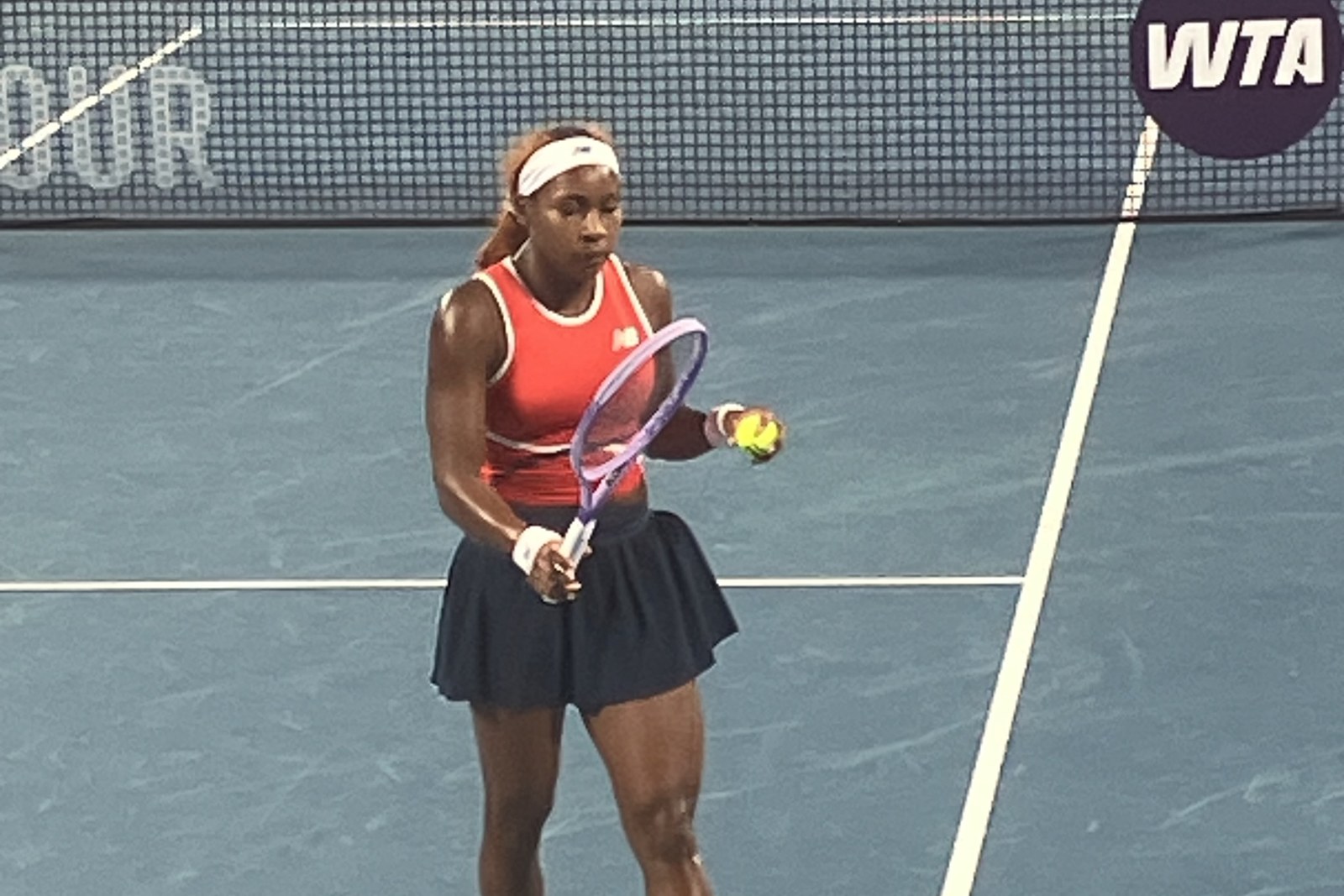
$54.6 million. That was the cutoff to make Forbes’ 2026 list of the world’s 50 highest-paid athletes. Coco Gauff, the highest-earning woman in sports, made an estimated $33 million in 2025—more than $20 million short.
For the third year running, not a single woman made the list. It is not close, and it has not been close for a while. But the number that matters more than the shutout is the one moving underneath it: Deloitte projects women’s elite sports will generate roughly $3 billion in revenue in 2026, up 340% since 2022. The gap at the very top is real. The gap in the money flowing toward women’s sports overall is closing fast.
Here is where female athlete earnings actually stand—and why the two headlines are both true at once.
1. Coco Gauff — $33 Million
Gauff topped Forbes’ female earnings list for the second consecutive year, with an estimated $25 million of her $33 million coming from endorsements rather than prize money. Her deals span New Balance, UPS, and Rolex, among others—brand partners betting on her as tennis’s next long-term commercial anchor now that she is a multiple Grand Slam champion still in her early twenties.
The split matters. Most of Gauff’s income is not tied to how deep she runs at any single tournament—it is contracted, recurring, and largely insulated from a bad quarter on the court. That is the same principle that built the men’s fortunes on Forbes’ highest-paid list: earnings that outlast performance are worth more than earnings that depend on it.
2. Aryna Sabalenka — $30 Million
The world No. 1 earned an estimated $30 million, with the bulk coming from tournament prize money befitting tennis’s top-ranked player, supplemented by deals including Porsche and Gucci. Sabalenka’s case is the clearest counterexample to the idea that female athletes only get paid through endorsements—when a woman’s on-court results are dominant enough, the prize money alone competes with a mid-tier men’s contract.
3. Iga Swiatek — $25.1 Million
Swiatek’s $25.1 million reflects a career built on sustained Grand Slam success rather than a single breakout year—she has been a fixture at the top of the women’s game since 2022. Her income mixes prize money with a long-running On and Rolex portfolio, brand relationships built for durability rather than a single hot season.
4. Zheng Qinwen — $22.6 Million
Zheng’s $22.6 million marks the continued rise of Chinese tennis as a commercial force, echoing the market Li Na opened a decade earlier. Her Olympic gold in 2024 accelerated a sponsorship pipeline into one of the largest consumer markets in the world—proof that a single career-defining result can reprice an athlete’s entire earning trajectory almost overnight.
5–8. Madison Keys, Naomi Osaka, Elena Rybakina, Jessica Pegula
Rounding out the top of the list: Madison Keys ($13.4 million), Naomi Osaka ($12.5 million), Elena Rybakina ($12.5 million), and Jessica Pegula ($12.3 million). Osaka’s presence is notable on its own—years removed from her peak ranking, her endorsement book (Nike, Nissan, Levi’s) has proven durable enough to keep her among the highest earners in women’s sports on brand value alone, not just results.
Six of the eight names above play tennis. Equal prize money at all four Grand Slams, a genuinely global WTA calendar, and decades of Title IX-driven investment in the sport in the United States give tennis a structural head start that most other women’s sports are still building toward.
The $20 Million Gap Nobody Is Closing Yet
Line up Gauff’s $33 million against Jannik Sinner’s $54.6 million cutoff and the gap is stark: even the best-paid woman in sports would need to earn 65% more just to graze the men’s top 50. That gap comes from two places. Team sports pay women through fundamentally smaller league structures—the WNBA’s total revenue is a fraction of the NBA’s, which caps what any single women’s team-sport salary can be, regardless of talent. And outside individual sports like tennis and golf, prize money and appearance fees for women still lag the equivalent men’s events in most disciplines.
Neither of those structural gaps closes with one good season. They close with media rights deals, expanded broadcast windows, and league revenue—the same mechanisms that built the men’s numbers over decades, not the same mechanisms that built any single athlete’s individual paycheck.
Where the Gap Is Actually Closing: The WNBA
The more interesting number is not on the Forbes list at all. Caitlin Clark’s reported WNBA salary is roughly $114,000—a figure that looks almost like a rounding error next to her estimated $16.1 million in 2025 endorsement income, anchored by an eight-year, $28 million Nike deal signed in 2024. Her league paycheck is not the story. Her brand value is. (Full breakdown, including the new CBA raise and her October 2026 signature shoe: Caitlin Clark Net Worth 2026: Salary Raise vs. Nike Deal.)
Clark is not alone. Sabrina Ionescu, Paige Bueckers, and Angel Reese now each earn $9 million or more off the court—figures that put them in range of plenty of NBA rotation players, despite WNBA salaries that remain far below their NBA counterparts. That is the same mechanism that built LeBron James’s business empire and Michael Jordan’s $4.3 billion fortune: the league check funds the career, but the brand is what actually compounds. Women’s basketball is now running that exact playbook, just a few years into a market that is repricing in real time.
Deloitte’s math backs it up: women’s elite sports are projected to generate roughly $3 billion in revenue in 2026, up 25% from 2025’s $2.4 billion and roughly 340% since 2022. That is not top-50-list money yet. It is the pipeline that eventually produces it.
Earnings Aren’t the Same Thing as Wealth
One clarification worth making: this list measures a single year of income, not accumulated net worth—the same distinction that separates Forbes’ highest-paid athletes from the richest athletes of all time. On that longer measure, Serena Williams remains the standard: Forbes put her career net worth at $400 million in June 2026, the largest fortune any female athlete has built, powered as much by her investment portfolio and business stakes as by anything she earned on court.
Gauff, Sabalenka, and Clark are still early in that same arc. The women topping this year’s earnings list are the ones with the leverage to start building the next Serena-style fortune—if they treat the current wave of brand money as capital rather than a paycheck.
The shutout at the top of the men’s list is a real number. So is the $3 billion moving beneath it. Both are true, and only one of them is standing still.
More from Absolute Baller:
- The World’s 10 Highest-Paid Athletes in 2026: Forbes Rankings Revealed
- Highest-Paid College Athletes 2026: $6.5M NIL Boom
- Caitlin Clark Net Worth 2026: Salary Raise vs. Nike Deal
- Richest Athletes in the World by Net Worth: 2026 Rankings
- Serena Williams Net Worth 2026: How She Became the Richest Female Athlete of All Time
- LeBron James Net Worth 2026: Inside the $1.4 Billion Business Empire
- Michael Jordan Net Worth 2026: How the $90M Career Salary Became a $4.3 Billion Fortune
- Why Pro Athletes Go Broke: The Financial Traps Draining Million-Dollar Careers
Frequently Asked
Why are there no women on Forbes' 2026 highest-paid athletes list?
The list's cutoff for 2026 was $54.6 million, set by tennis's Jannik Sinner. Coco Gauff, the highest-earning woman in sports, made an estimated $33 million in 2025—more than $20 million short. It is the third consecutive year no woman has cracked Forbes' top 50, a gap driven mainly by team-sport salary structures and endorsement deal sizes that still trail the men's game.
Who is the highest-paid female athlete in 2026?
Coco Gauff, with an estimated $33 million in 2025 earnings—$25 million of it from endorsements—according to Forbes. It is her second consecutive year atop the women's earnings list, ahead of Aryna Sabalenka ($30 million) and Iga Swiatek ($25.1 million).
How much does Caitlin Clark make compared to her WNBA salary?
Caitlin Clark's WNBA salary was reported at roughly $114,000, while her endorsement income reached an estimated $16.1 million in 2025—overwhelmingly driven by her eight-year, $28 million Nike deal signed in 2024. She is the highest-paid WNBA player, and her income mix illustrates the broader pattern in women's sports: the league paycheck is a fraction of what brand deals now pay.
Is the gender pay gap in professional sports closing?
On the endorsement and revenue side, yes and quickly. Deloitte projects women's elite sports will generate roughly $3 billion in revenue in 2026, up 25% from 2025's $2.4 billion and about 340% since 2022. Four WNBA players—Caitlin Clark, Sabrina Ionescu, Paige Bueckers, and Angel Reese—now earn $9 million or more off the court, comparable to many of their NBA counterparts. The Forbes top-50 list, which weights individual playing contracts and prize money, has not caught up yet.
What sport produces the most highly-paid female athletes?
Tennis, by a wide margin. Six of the top earners on Forbes' 2025 women's list play tennis: Coco Gauff, Aryna Sabalenka, Iga Swiatek, Zheng Qinwen, Madison Keys, and Elena Rybakina, plus Naomi Osaka and Jessica Pegula just behind them. Equal Grand Slam prize money and a global WTA calendar give tennis a structural advantage that most other women's sports still lack.